


Key Takeaways
- A Johnson & Johnson survey of 6,000 women across 6 countries found that 40% associated eye changes with the menopause transition
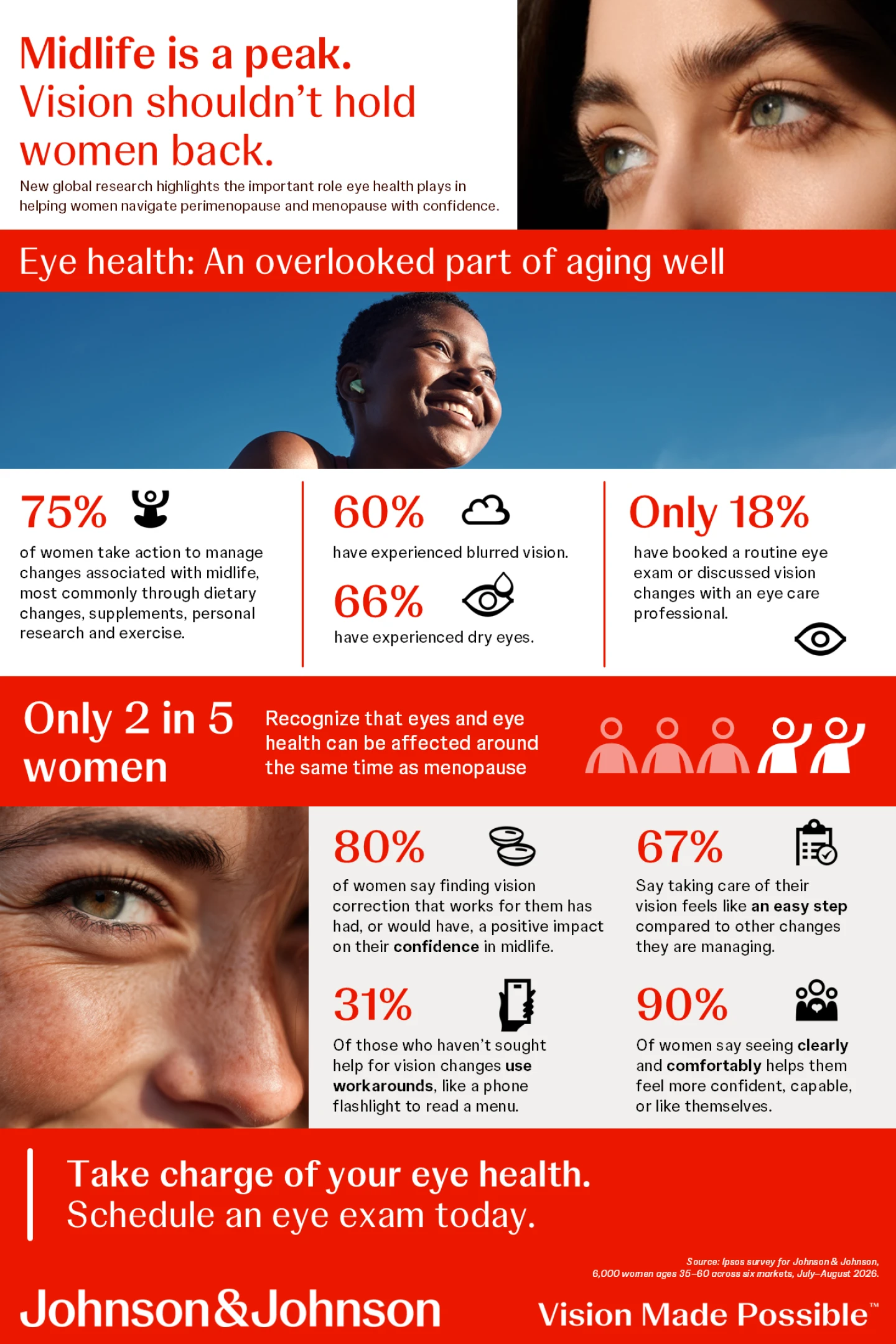
- Although 66% of respondents reported dry, gritty, or irritated eyes and 60% reported blurred vision, only 18% had discussed their changes with an eye care professional
- Johnson & Johnson and the American Optometric Association are encouraging greater discussion of eye and vision health as part of midlife and menopause care
A new global survey commissioned by Johnson & Johnson suggests that many women are unaware that eye and vision changes may occur alongside the menopause transition, despite frequently reporting symptoms such as dry eyes and blurred vision.
The survey included 6,000 women across the United States, United Kingdom, Brazil, South Korea, Japan, and China. According to Johnson & Johnson, 40% of respondents associated eye changes with the menopause transition, while 90% said seeing clearly and comfortably contributed to feeling confident, capable, or like themselves.
Released during Menopause Awareness Month, the findings are part of an awareness initiative involving Johnson & Johnson, actress and menopause advocate Naomi Watts, and the American Optometric Association (AOA).
“We’re talking more openly about menopause, but eye health is still too often left out,” Ms. Watts, founder of Stripes Beauty, said in the announcement. “I want women to know they don’t have to quietly work around changes like dry eyes or blurry vision.”
Although 75% of respondents reported taking some action to manage changes associated with midlife, only 18% said they had booked an annual eye examination as part of that routine, according to the survey.
Approximately two-thirds of respondents, 66%, reported experiencing dry, gritty, or irritated eyes, while 60% reported blurred vision. However, only 18% had discussed these changes with an eye care professional.
Among women who had not sought professional help for vision changes, 31% reported using a phone flashlight to read a menu or employing other strategies, such as enlarging text or holding reading material farther away.
“Too many women are simply adapting to midlife vision changes without realizing there are solutions available,” Charissa Lee, OD, head of professional affairs, Vision, Johnson & Johnson, said in the announcement. “By making eye health part of the menopause conversation, we can help women find the options that support clear, comfortable vision and everyday confidence.”
Eye changes during midlife
A number of ocular and visual changes can coincide with midlife and the menopause transition. These can include ocular surface symptoms such as dryness and irritation as well as difficulty with near vision. Presbyopia, which develops as the crystalline lens loses flexibility with age, commonly becomes noticeable during the same period of life.
Because several age-related and health-related factors can contribute to visual symptoms, a comprehensive eye examination can help clinicians determine their cause and identify appropriate management options.
“Eye and vision health needs to be part of the broader health conversation as women navigate menopause,” Teri K. Geist, OD, president of the AOA, said in the announcement. “A comprehensive eye exam and an open dialogue with your doctor of optometry can help women understand the changes they may be experiencing, identify eye health concerns they may not notice on their own and get the care they need to see and feel their best.”
As part of the campaign, Ms. Watts will continue sharing information about her own eye health experiences, while the AOA plans to provide optometrists with resources for discussing eye and vision changes with patients navigating menopause.

