


Key Takeaways
- Greater adherence to a Mediterranean-style diet was associated with slower AMD progression across early, intermediate, and advanced disease stages
- Fish and vegetables appeared particularly beneficial for intermediate AMD, while greater fruit and vegetable intake, less red meat, and avoidance of heavy alcohol were associated with slower GA progression
- A healthy diet should complement—not replace—AREDS2 supplementation in patients with intermediate or advanced AMD
Patients with age-related macular degeneration (AMD) may benefit from adopting a Mediterranean-style diet, with the most important foods varying according to disease stage, according to a review published in the American Journal of Ophthalmology.1
After evaluating evidence from the Age-Related Eye Disease Study (AREDS), AREDS2, and major epidemiologic studies, researchers concluded that closer adherence to a Mediterranean diet was consistently associated with slower AMD progression. The authors recommended a diet rich in vegetables, fruits, whole grains, legumes, nuts, seeds, and fish, with reduced consumption of red and processed meats, refined carbohydrates, and excessive alcohol.
The publication was a focused literature review and clinical perspective rather than a new randomized clinical trial. As a result, the findings primarily demonstrate associations between dietary patterns and AMD outcomes rather than proving that dietary changes directly prevent progression.
Among AREDS participants with early or no AMD, individuals whose diets most closely resembled a Mediterranean eating pattern were less likely to progress to intermediate disease. Participants with the highest adherence were 21% less likely to develop large drusen than those with the lowest adherence. Another analysis associated medium or high adherence with a 17% lower risk of drusen-size progression. Higher consumption of green leafy vegetables and fish was also associated with a lower risk of progression between early, intermediate, and late AMD.
The authors found no evidence supporting the use of oral micronutrient supplements in patients with early AMD.
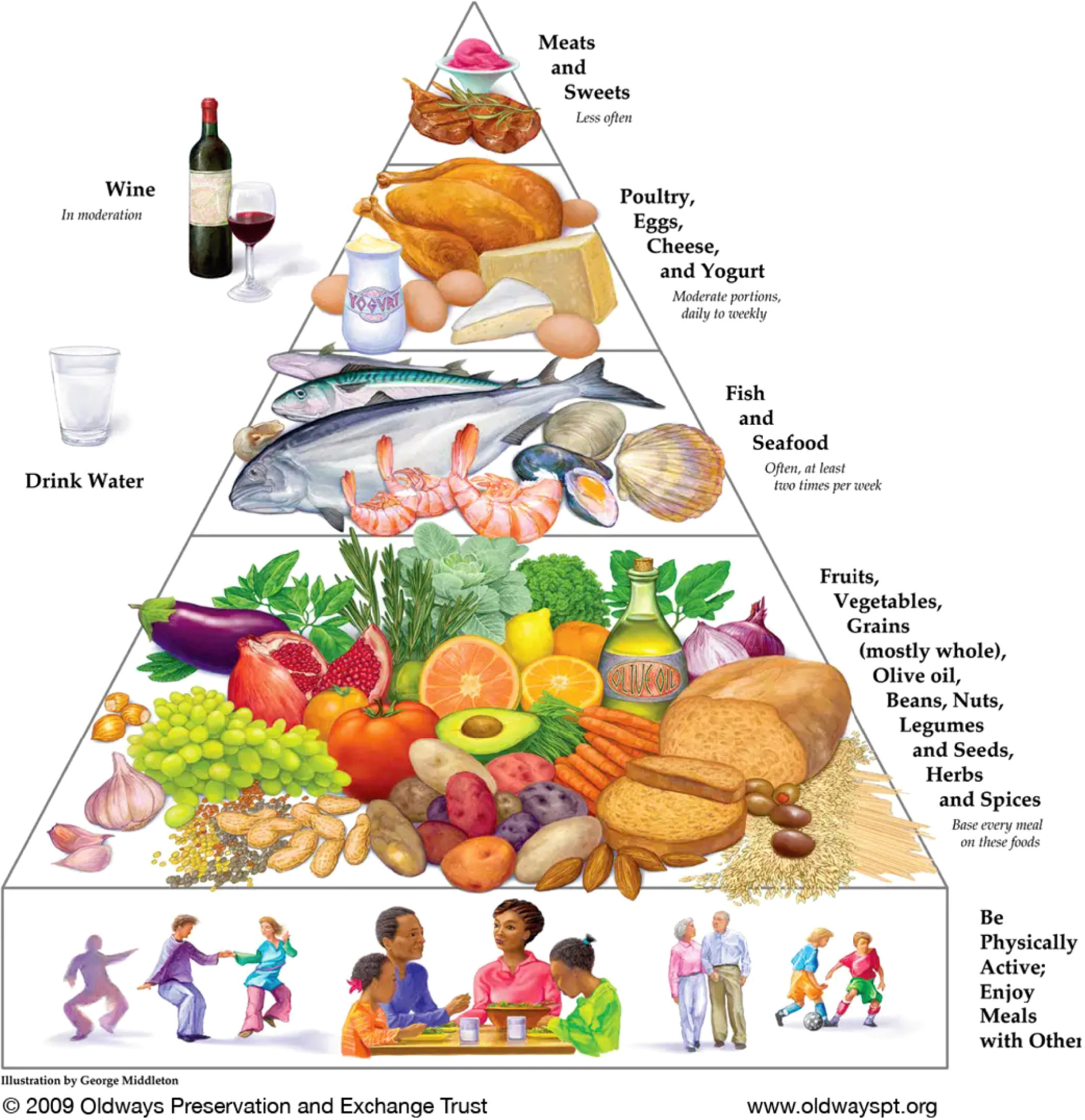
The association between diet and disease progression was also observed among patients with intermediate AMD. Across AREDS and AREDS2, participants with the highest Mediterranean-diet adherence had a 23% lower risk of developing late AMD than those with the lowest adherence. The association was stronger for progression to geographic atrophy (GA), with a 29% risk reduction, than for neovascular AMD, with a 16% reduction.
Fish appeared to be the most influential individual dietary component. Participants in the highest quartile of fish intake had a 31% lower risk of progressing to late AMD compared with those in the lowest quartile. Higher vegetable intake was associated with a 23% reduction in risk, while greater red-meat consumption was associated with a 20% increase. In AREDS, patients in the highest fish-consumption group ate a median of approximately 3 to 4 medium-sized servings per week.
The authors noted that dose-response relationships were observed, suggesting that patients may benefit from moderate dietary improvements even if they cannot fully adopt a Mediterranean diet.
Diet may remain important after GA develops, according to the review. In AREDS2, the mean GA enlargement rate was approximately 15% slower among participants with the highest Mediterranean-diet adherence compared with those with the lowest adherence.
Higher whole-fruit intake was associated with 22% slower GA enlargement, while lower red-meat intake was associated with a 23% slower enlargement rate. Avoiding heavy alcohol consumption and replacing saturated fat with monounsaturated fat were also associated with slower progression. Among patients with extrafoveal GA, greater adherence to a Mediterranean diet was associated with approximately 30% slower progression toward the fovea. Higher vegetable intake had the strongest association, corresponding to 40% to 50% slower foveal progression in the upper intake groups.
For patients with GA, the authors recommended emphasizing fruits and vegetables, reducing red-meat consumption, and avoiding heavy alcohol use. Unlike its association with progression to late AMD, fish intake was not significantly associated with the rate of existing GA enlargement.
The authors emphasized that healthy eating and AREDS2 supplementation should be viewed as complementary components of AMD management.
The AREDS2 formulation—containing vitamins C and E, zinc, copper, lutein, and zeaxanthin—is recommended for patients with intermediate AMD or advanced AMD in at least 1 eye. Supplementation appears to preferentially reduce the risk of neovascular AMD, while Mediterranean-diet adherence may have a stronger relationship with reduced GA progression.
Post hoc analyses have suggested that AREDS2 supplements may slow the progression of extrafoveal GA toward the fovea by approximately 50%. The authors cautioned that this finding requires confirmation in a prospective clinical trial.
Reference
1. Keenan TDL, Hébert M, Chew EY, Johnson MW. What should patients with age-related macular degeneration eat? Am J Ophthalmol. 2026;288:12-21. doi:10.1016/j.ajo.2026.04.003
