


Key Takeaways
- WCO and Alcon have updated the WCO Alcon Dry Eye Wheel to align with recommendations from the TFOS DEWS III report
- New features include dry eye etiological drivers, the OSDI-6 questionnaire, and expanded management guidance
- The updated wheel, management map, and educational resources are available free of charge in multiple languages to support global dry eye disease care
The World Council of Optometry (WCO) and Alcon have launched an updated version of the WCO Alcon Dry Eye Wheel, incorporating the latest recommendations from the recently published Tear Film & Ocular Surface Society Dry Eye Workshop III (TFOS DEWS III) report.
The no-cost clinical resource is designed to help eye care professionals (ECPs) support patients with dry eye disease through three key steps: mitigation, measurement, and management. The interactive tool is available online and is intended to provide practitioners with current, evidence-based guidance for dry eye diagnosis and treatment.
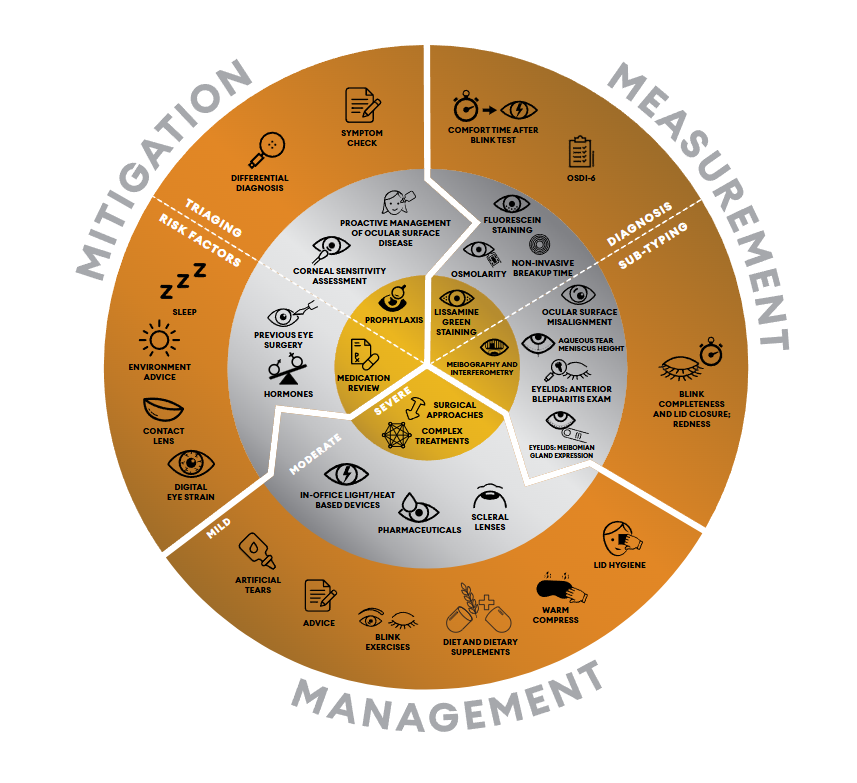
According to WCO, the updated wheel includes several enhancements based on TFOS DEWS III recommendations, including the addition of dry eye etiological drivers, integration of the OSDI-6 symptomatology questionnaire, and new and refined management options.
“Clinicians and educators who use the WCO Alcon Dry Eye Wheel as part of their daily practice can be assured that it reflects the most current consensus recommendations from the world’s top experts,” said Cindy Tromans, BSc (Hons), PhD, FEAOO, president of WCO.
The revised wheel complements the WCO Alcon Dry Eye Management Map, an interactive online resource developed to assist ECPs in navigating dry eye disease management. Both tools are available in multiple languages, including Arabic, Chinese, French, and Spanish, with additional language support planned.
The broader WCO-Alcon dry eye initiative website has also been expanded to include a three-part educational video series designed to help practitioners better understand the TFOS DEWS III report. The series provides an overview of the report, reviews diagnostic methodologies, and highlights recommendations related to management and therapy.
While the tools are intended to support clinical decision-making, WCO emphasized that optometrists retain full medical judgment and responsibility for determining the most appropriate course of care for individual patients. Additional information about the initiative and educational resources is available through the WCO-Alcon dry eye program website.
