


Key Takeaways
- Continuous IOP monitoring in rats showed a daily pressure rhythm, including nighttime elevations influenced by neural signals from the brain to the eye
- Constant light eliminated the normal IOP rhythm and increased mean pressure, supporting a role for circadian signaling in IOP regulation
- Understanding circadian control of IOP and aqueous humor drainage could inform future research into glaucoma mechanisms and the timing of pressure-lowering therapies
A series of studies from University of South Florida (USF) researchers is providing new insight into how circadian rhythms and light exposure may regulate intraocular pressure (IOP), potentially opening new avenues for understanding glaucoma risk and treatment timing, according to an article posted on the USF website.
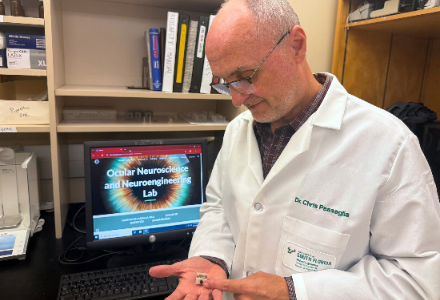
The research, led by Christopher Passaglia, PhD, professor and associate chair in the Department of Medical Engineering at USF Health, uses a wireless monitoring system developed in his laboratory to continuously measure IOP in rats. Alexandra Zamitalo, a USF alumna, served as lead author on the latest work, published in Investigative Ophthalmology & Visual Science.
Unlike conventional tonometry, which provides a measurement at a single point in time, the system allows investigators to track IOP continuously as animals move through their normal daily activities and sleep-wake cycles. Rats exhibit daily IOP rhythms similar to those observed in humans, making the model useful for examining mechanisms that may be difficult to capture during routine clinical measurements.
“Researchers have known for years that eye pressure rises and falls over 24 hours,” Dr. Passaglia said in the article. “The problem is that most measurements are taken when patients are awake and sitting in a doctor’s office. What happens while a person is sleeping is rarely captured.”
Neural signals linked to nighttime IOP elevation
Continuous measurements demonstrated a daily IOP rhythm, with pressure increasing during the night. According to the researchers, those nighttime levels, if sustained continuously, would be associated with glaucoma, although the animals do not develop the disease under normal circumstances.
The investigators also found evidence that the nighttime increase is driven by neural signals traveling from the brain to the eye. The observation suggests that IOP is influenced by the biological timing system coordinating physiological processes throughout the body rather than being controlled exclusively by mechanisms within the eye.
“If you think about what the brain does, it’s constantly coordinating activities throughout the body,” Dr. Passaglia said. “What we’re showing is that eye pressure appears to be another one of those processes under that kind of control.”
The findings could be important for glaucoma research because elevated IOP remains a major modifiable risk factor for the disease. Understanding the mechanisms responsible for physiological fluctuations could help investigators determine whether the magnitude, duration or timing of IOP elevations contributes to disease development and progression.
Constant light disrupts pressure rhythm
Researchers further examined the relationship between circadian signaling and IOP by disrupting the animals’ normal light-dark cycle. When rats were exposed to constant light, the normal IOP rhythm disappeared and mean pressure increased.
The studies also implicated changes in aqueous humor drainage as part of the daily pressure cycle. Optical coherence tomography imaging showed that aqueous drainage vessels became smaller at night, reducing fluid drainage and providing a potential physiological explanation for nocturnal IOP elevations.
The findings do not establish that routine artificial-light exposure causes glaucoma, and results from an animal model cannot be directly extrapolated to patients. Instead, the work provides additional evidence that IOP regulation is linked to circadian biology and raises questions about how disruption of normal biological timing might affect ocular physiology over longer periods.
Potential implications for glaucoma treatment
The research is not expected to alter glaucoma management immediately, but defining the neural pathways, signaling molecules and ocular tissues involved in circadian IOP regulation could provide targets for future investigation.
A better understanding of the timing of IOP changes could also have implications for chronotherapy—the concept of administering treatment at particular times to maximize its effect. Circadian influences could potentially help explain why IOP-lowering therapies have different effects during the day and night and whether treatment schedules could eventually be optimized around patients’ pressure rhythms.
