


Oculis announced new translational biomarker findings from its phase 2 ACUITY trial evaluating Privosegtor in patients with acute optic neuritis (ON), reporting reductions in blood-based markers associated with neuroaxonal injury and glial activation compared with placebo.
The late-breaking findings were presented by Céline Louapre, MD, PhD, of Pitié-Salpêtrière Hospital and Sorbonne University in Paris, during the 10th Joint ACTRIMS-ECTRIMS Meeting, MSToronto 2026.
The biomarker analysis evaluated plasma neurofilament light chain (NfL) and glial fibrillary acidic protein (GFAP), which serve as indicators of neuroaxonal damage and glial responses, respectively. According to Oculis, Privosegtor reduced increases in both biomarkers compared with placebo, with the most pronounced differences observed at early timepoints following acute ON onset.
These findings complement previously reported results from the ACUITY trial demonstrating improvements in visual function and preservation of retinal structure.
In earlier analyses, patients receiving Privosegtor demonstrated an 18-letter improvement in low-contrast visual acuity at Month 3 compared with steroid treatment alone. The company also reported evidence of retinal structural preservation, suggesting a potential protective effect on neural tissue following acute optic nerve inflammation.
Taken together, the functional, structural, and circulating biomarker findings provide additional evidence supporting further investigation of Privosegtor as a potential neuroprotective treatment for ON.
The new analysis adds a blood-based assessment of treatment effects to the clinical and retinal imaging outcomes previously reported in ACUITY. However, the findings remain preliminary, and additional clinical investigation is needed to establish whether these biomarker changes translate into sustained neuroprotection and long-term visual benefits.
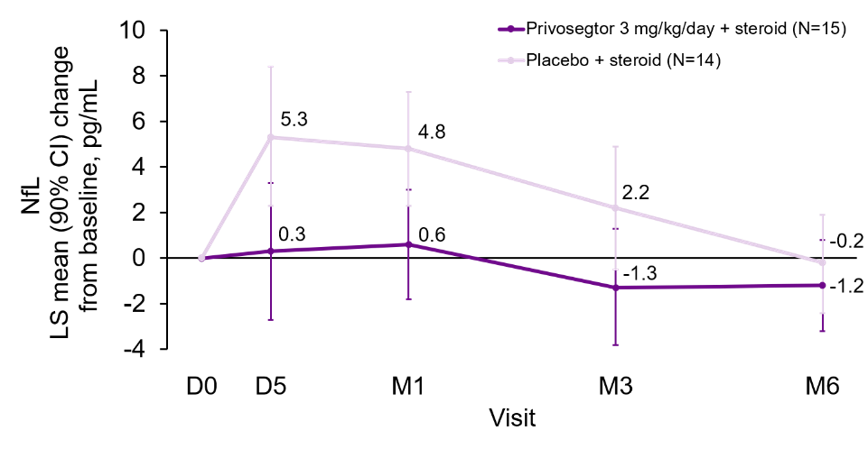
At Day 5, the mean increase in plasma NfL was higher in the placebo group than in the Privosegtor group. NfL levels remained stable in the Privosegtor group through Month 6, whereas levels in the placebo group remained elevated above baseline at Month 1 before returning to baseline by Month 6. Lower NfL levels are consistent with reduced structural neuroaxonal injury along the optic nerve pathway.
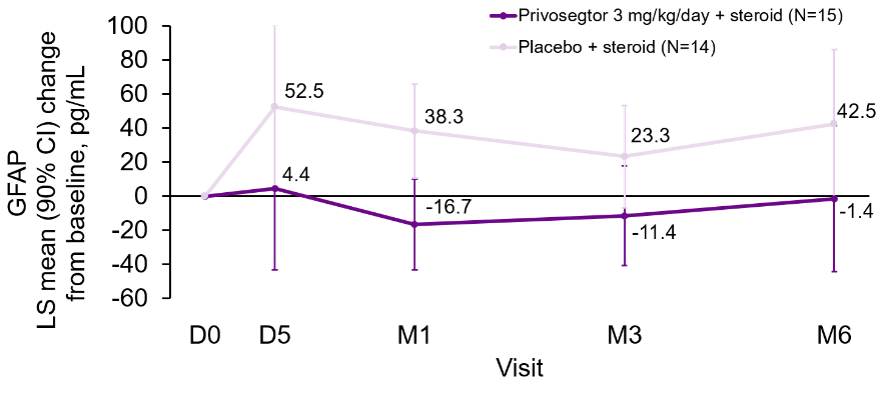
At Day 5, the mean increase in plasma GFAP was greater in the placebo group than in the Privosegtor group. GFAP levels remained elevated above baseline in the placebo group from Month 1 through Month 6, whereas they remained below baseline in the Privosegtor group over the same period. Lower plasma GFAP levels are consistent with reduced acute reactive astrocytic inflammation and reduction of the secondary neurodegenerative cascade.
“These findings are particularly noteworthy because they provide biological evidence that complements the functional and retinal structural improvements previously observed in ACUITY," said Dr. Louapre, Professor of Neurology at Pitié-Salpêtrière Hospital, Sorbonne University, and presenting author. "The consistent effects across NfL and GFAP suggest that Privosegtor may be influencing multiple pathways involved in tissue injury following acute optic neuritis, supporting its potential as a neuroprotective therapeutic approach. Together, these data deepen our understanding of the treatment's effects and further support continued clinical evaluation.”
