


Oculis Holding announced positive topline results from its phase 2b RELIEF trial with licaminlimab, a novel anti-TNFα biologic eye drop with an established dual anti-inflammatory and anti-apoptotic mechanism of action in patients with dry eye disease (DED).
The phase 2b RELIEF trial is a multicenter, randomized, double-masked, vehicle-controlled trial evaluating the efficacy and safety of licaminlimab in subjects with signs of DED (NCT05896670). The trial also evaluated the efficacy and safety of licaminlimab in a subpopulation of subjects with a TNFR1-related genotype as prespecified in the protocol. In the trial, 122 patients were randomized 1:1 to either licaminlimab (n=62) or vehicle (n=60) across 4 sites for a 6-week treatment period and a 2-week follow up. A total of 23 patients carried a specific TNFR1-related genotype. Patients were evaluated for efficacy endpoints at baseline, Day 15 and Day 43. The prespecified investigational efficacy measures in this trial included multiple signs of DED that are accepted by the FDA as efficacy endpoints.
Phase 2b RELIEF trial showed positive effects on multiple signs of DED
- For the full trial population (n=122): Treatment effect favoring licaminlimab was observed in multiple sign endpoints including fluorescein staining in the total cornea, inferior corneal, central corneal and nasal conjunctival regions, and in the Schirmer’s test.
- For the subpopulation of patients with the TNFR1 genetic biomarker (n=23): Treatment effect favoring licaminlimab was observed in multiple sign endpoints including fluorescein staining in the total cornea, inferior corneal, central corneal, nasal conjunctival, total conjunctival and total ocular surface regions, in the Schirmer’s test, and in conjunctival redness.
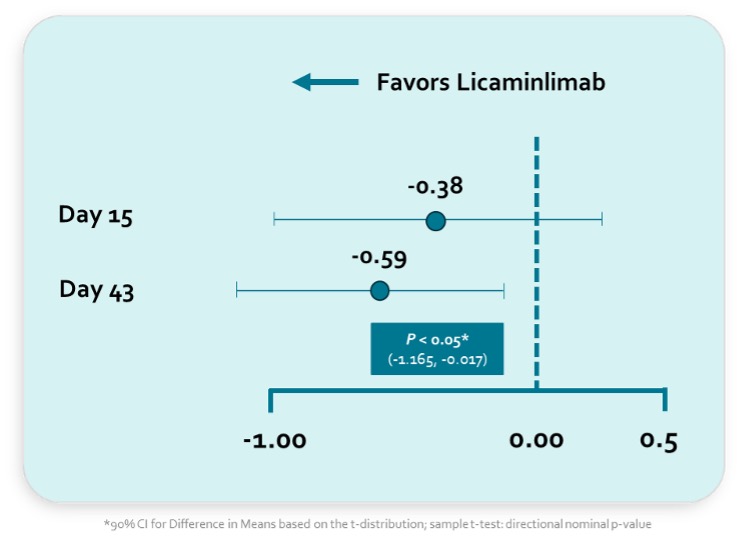
- Rapid and favorable treatment effect in favor of licaminlimab on corneal inflammation was observed as early as Day 15 that was significant at Day 43, as measured by the difference in mean change from baseline versus vehicle for inferior corneal fluorescein staining score: -0.59 (CI: -1.165, -0.017). The treatment effect also increased over time. See Figure below:
- Licaminlimab was well tolerated. The incidence of ocular TEAEs in the study eye was 11.5% in the licaminlimab group and 10.2% in the vehicle group. TEAEs in the fellow eye were similar to the study eye. All ocular TEAEs were mild and transient, and there were no serious ocular adverse events observed with licaminlimab in the study. Drop comfort was also evaluated and was similar to artificial tears.
“We are pleased that we achieved all of our objectives for the trial, and extremely encouraged to see licaminlimab’s profound results with a precision medicine approach which has the potential to transform the way we develop drugs and treat patients in ophthalmology," Riad Sherif, MD, Chief Executive Officer of Oculis, said in a company news release. "With this and prior positive results on signs and symptoms, we look forward to discussing these encouraging data with the FDA and advancing this program into phase 3.”
The company is planning to conduct an end-of-phase 2 meeting with the FDA to discuss the registrational path for licaminlimab in DED and finalize the phase 3 development plan.
