


Key Takeaways
-
NovaBridge Biosciences reported positive phase 2a topline results for VIS-101, a dual VEGF-A and ANG-2 inhibitor being developed for retinal vascular diseases including wet AMD
-
The therapy demonstrated significant visual acuity improvements, reductions in retinal thickness, and promising durability
-
The company plans to initiate a dose-finding phase 2b study in the second half of 2026, with a global phase 3 program expected to begin in 2027
NovaBridge Biosciences and its subsidiary Visara Inc. announced positive topline results from a phase 2a study evaluating VIS-101, an investigational therapy for retinal vascular diseases.
VIS-101 is a purpose-designed tetravalent, dual VEGF-A and ANG-2 inhibitor being developed to treat conditions including wet age-related macular degeneration (AMD), diabetic macular edema (DME), and retinal vein occlusion (RVO). According to the company, the phase 2a data demonstrated rapid, robust and durable treatment responses in patients with wet AMD, along with a favorable safety profile.
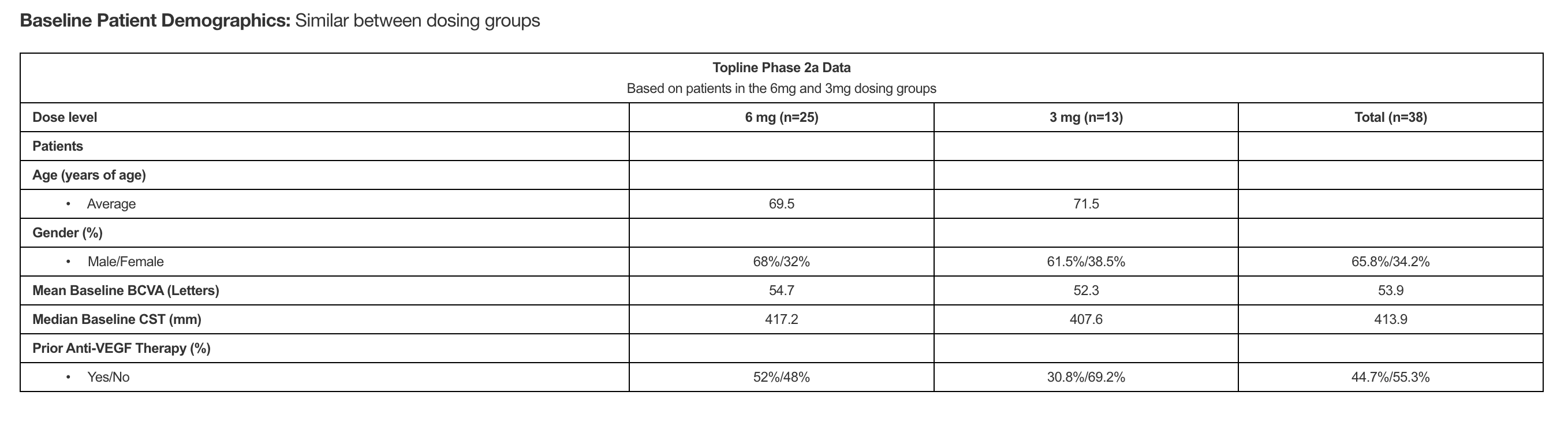
The randomized Phase 2a study enrolled 38 patients in China aged 50 to 80 with wet AMD, including both treatment-naïve and previously treated individuals. Participants were randomized in a 2:1 ratio to receive either a 6 mg dose (n=25) or a 3 mg dose (n=13). Baseline characteristics were generally similar between the two groups, although the 6 mg cohort included a slightly higher proportion of previously treated patients.
Topline results from the study showed that patients treated with VIS-101 experienced significant improvements in vision and retinal anatomy across both dose groups tested.
Patients receiving either the 3 mg or 6 mg dose achieved:
-
Mean improvement in best corrected visual acuity (BCVA) of more than 10 ETDRS letters
-
Median reduction in central subfield thickness (CST) of 100–150 µm
The therapy also demonstrated strong durability signals. Approximately two-thirds of patients remained retreatment-free at 4 months, and about half remained retreatment-free at 6 months after receiving three loading doses. No dose-limiting toxicity was observed in the trial.
 Emmett T. Cunningham Jr., MD, PhD, MPH, founder and executive chairman of Visara and vice chairman of NovaBridge’s board of directors, said the results support the therapy’s design and development potential.
“I am encouraged by the positive phase 2a safety and efficacy data as it provides important proof-of-concept for VIS-101 as a potential treatment for wet AMD,” Mr. Cunningham said. “The data validates VIS-101’s purpose-engineered design and gives us added confidence in its potential to deliver best-in-class durability while maximizing visual gains.”
The company plans to initiate a dose-determining phase 2b trial in the second half of 2026, followed by a global phase 3 program in 2027.

