


New research from Moorfields Eye Hospital, published today in the British Journal of Ophthalmology, has demonstrated that a widely used eye injection can effectively treat hypotony—a rare and previously untreatable condition that can lead to irreversible vision loss and blindness.1
Hypotony is characterised by abnormally low pressure inside the eye, which disrupts its normal shape and internal structure. Over time, this distortion damages vision, often progressing slowly over several years before resulting in blindness. The condition can develop when underlying eye diseases damage the structures responsible for producing the fluid that maintains normal eye pressure.
Until now, the standard treatment for vision loss caused by hypotony has been the use of silicone oil to fill the eye. While often beneficial, silicone oil is not an ideal long-term solution as it can be toxic to eye tissues over time and significantly impair visual clarity.
The new data show that ocular injections containing hydroxypropyl methylcellulose (HPMC)—a low-cost, clear gel routinely used in eye surgery—can safely increase eye volume and pressure in patients with hypotony. By restoring both the size and pressure of the eye, the treatment also led to meaningful improvements in vision, according to researchers from Moorfields Eye Hospital.
In the study, seven of the eight patients treated experienced improvements in vision, eye pressure, and eye length after a 12-month course of injections. All patients were treated at the world’s first dedicated hypotony clinic, established at Moorfields with funding from Moorfields Eye Charity.
According to a Moorfields news release, among the patients treated was Nicki, whose sight problems began shortly after the birth of her son, when she was diagnosed with uveitis. After several symptom-free years, cataracts and further complications led to worsening vision and unstable eye pressure. Nicki underwent multiple treatments, including steroids and silicone oil. Some provided temporary relief, while others resulted in sudden pressure drops or complete loss of vision.
Her turning point came when her Moorfields consultants explored an alternative to silicone oil, trialling injections of a clear gel designed to support eye pressure and restore function.
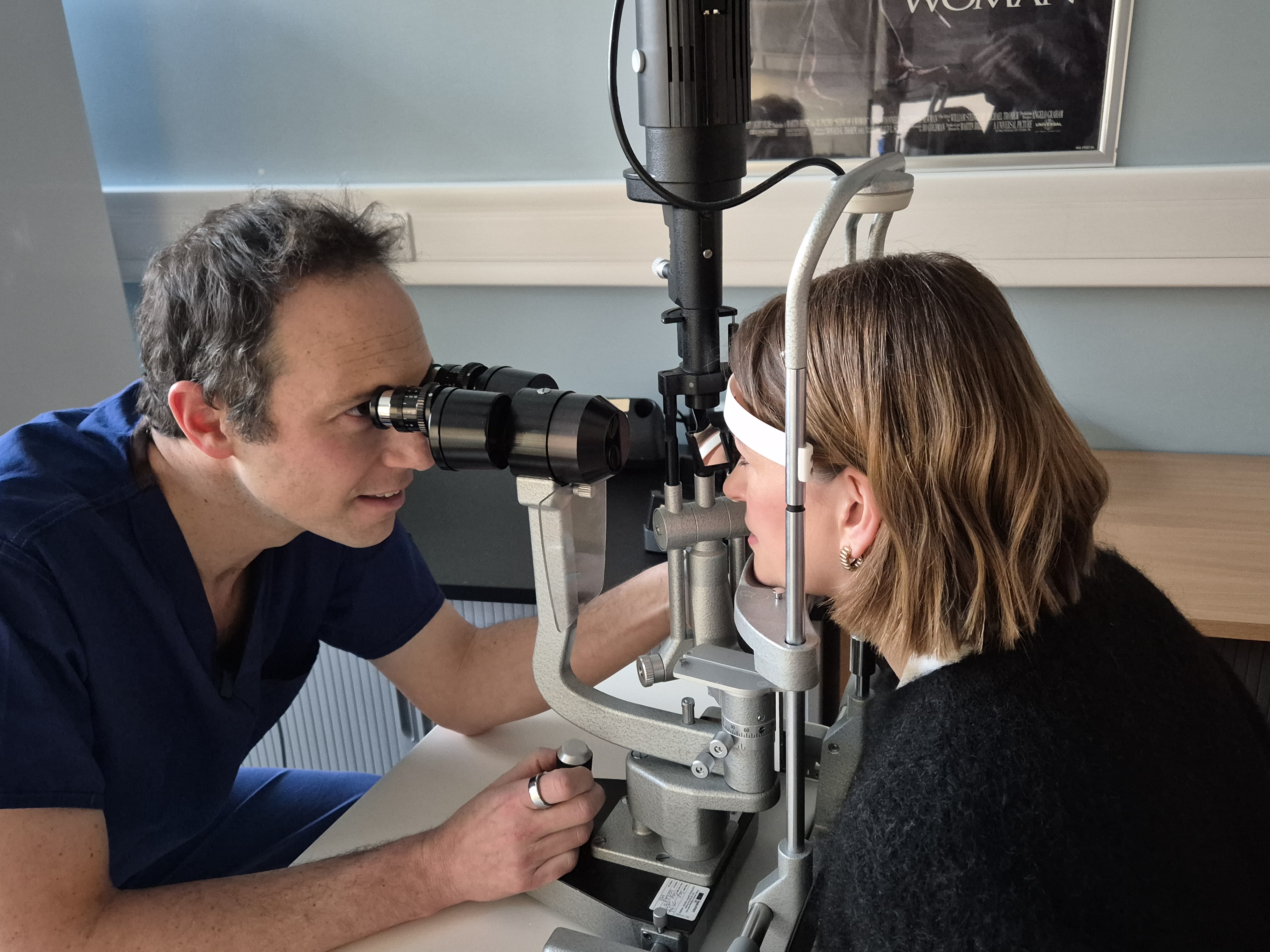
A New Direction for Hypotony Care
Moorfields consultant ophthalmologist Harry Petrushkin, MA, FRCOphth, PhD, who served as the lead author of the study, talked to EyewireTV about the future potential of this treatment.
"I think of this as being the foothills of the new area of ophthalmology that needs a huge amount of thought and effort put into it, and really has just been quite neglected for decades," he said. "this is very early data. We don't know how this will translate to bigger cohorts. I expect, from my clinical experience, that it will translate well."
Dr. Petrushkin added that HPMC was used in the original cohort because the patients were unvitrectomized. Moving forward, the researchers intend to try different polymers on a head-to-head basis.
The Moorfields hypotony clinic combines structured clinical assessment with close collaboration with bioengineers at University College London to better understand the mechanisms driving chronic low intraocular pressure. Although preliminary, the researchers says the findings are already shaping national discussions around standardising hypotony treatment and provide a strong foundation for larger, formal clinical trials to further evaluate this promising approach.
The project was made possible through funding from Moorfields Eye Charity.
1) Petrushkin H, Song A, et al. Intravitreal hydroxypropyl methylcellulose injection for ocular hypotony: Early clinical outcomes from a dedicated hypotony clinic. British Journal of Ophthalmology 2026; bjo-2025-327866. doi:10.1136/bjo-2025-327866. Available ahead of print at British Journal of Ophthalmology, January 4, 2026.

