


Key Takeaways
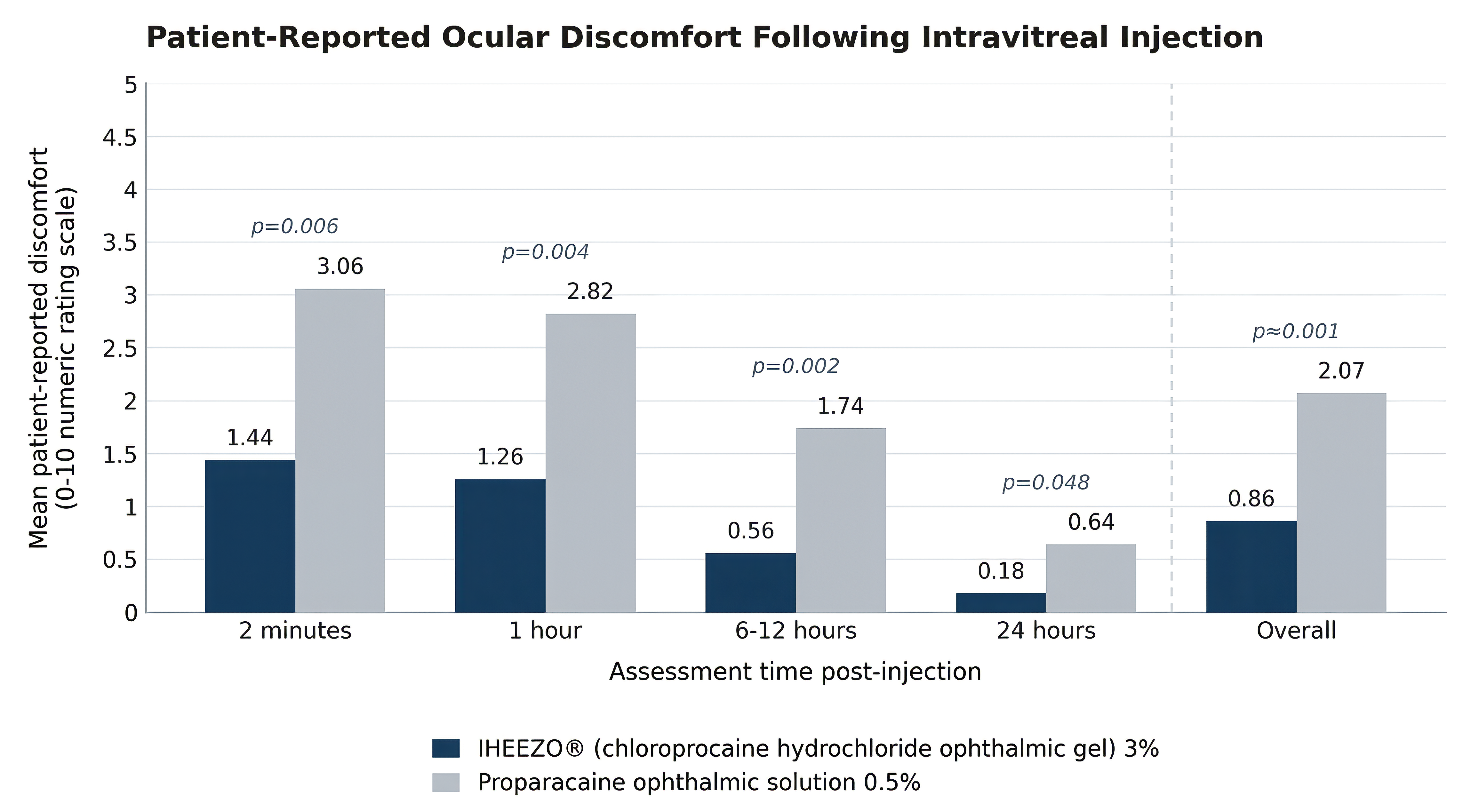
- Patients reported approximately 58% less overall discomfort in Iheezo-treated eyes compared with fellow eyes receiving proparacaine, with statistically significant differences at all 4 assessments
- The largest differences occurred shortly after intravitreal injection, including a 1.62-point difference at 2 minutes and a 1.56-point difference at 1 hour
- The prospective contralateral-eye study included 50 patients undergoing same-day bilateral intravitreal injections, allowing each patient to serve as their own control
Harrow announced positive results from a prospective, randomized, contralateral-eye study evaluating Iheezo (chloroprocaine hydrochloride ophthalmic gel) 3% for ocular surface anesthesia in patients undergoing same-day bilateral intravitreal injections.
The single-center, investigator-initiated study included 50 adult patients, representing 100 eyes, and found statistically significant differences in patient-reported discomfort favoring Iheezo over proparacaine ophthalmic solution 0.5% at all 4 post-injection assessments.
According to Harrow, patients reported approximately 58% less discomfort overall in eyes treated with Iheezo compared with fellow eyes treated with proparacaine. Differences between the treatments were statistically significant at each measured time point (all P ≤ .048).
The largest absolute differences were observed soon after injection, when patient-reported discomfort was highest. At 2 minutes, mean discomfort scores were 1.44 with Iheezo compared with 3.06 with proparacaine, an absolute difference of 1.62 points. At 1 hour, scores were 1.26 and 2.82, respectively, representing a 1.56-point difference. Lower discomfort scores in Iheezo-treated eyes remained evident through the 24-hour assessment.
“Patient comfort is a larger part of the intravitreal injection experience than it is sometimes given credit for,” Travis Peck, MD, of Retina Consultants of Delmarva and principal investigator of the study, said in the announcement.
Dr. Peck noted that the contralateral-eye design allowed investigators to directly compare the 2 anesthesia approaches within individual patients on the same day.
“Patients consistently reported less discomfort in the Iheezo-treated eye across all time points we measured,” he said. “For retina specialists who perform a high volume of injections and care for patients who return repeatedly for treatment, these are practical and clinically relevant findings.”
The prospective study was conducted at a private retina practice. Each participant underwent same-day bilateral intravitreal injections, with 1 eye randomly assigned to receive Iheezo and the fellow eye receiving preservative-containing proparacaine ophthalmic solution 0.5%. Both eyes received pledgets soaked with lidocaine 2% before administration of the randomized study anesthetic. By comparing treatments in fellow eyes of the same patient, investigators sought to reduce between-patient variability in perceptions of discomfort.
“These results provide new clinical evidence from a real-world practice setting supporting Iheezo’s differentiated clinical profile versus commonly administered legacy ophthalmic anesthesia modalities,” said Harrow CEO Mark L. Baum.
The company said the findings could be particularly relevant to retina practices managing patients who undergo injections repeatedly over months or years.
