


Key Takeways
- The FDA granted De Novo marketing authorization to Avulux, establishing a new device classification for precision optical filters intended to decrease the impact of light sensitivity in patients with episodic migraine
- Avulux filters light at 480 nm and 590 nm while transmitting the remaining visible spectrum and is indicated for patients aged 12 years and older
- The lenses can be dispensed with or without a vision prescription and are intended to complement, rather than replace, patients' usual migraine care and medication use
The FDA has granted De Novo marketing authorization to Avulux for its precision light-filtering lenses designed to decrease the impact of light sensitivity in patients with episodic migraine, establishing a new FDA-recognized device classification for the technology.
According to Avulux, the authorization applies to patients aged 12 years and older who have been diagnosed with episodic migraine. The company said the decision provides patients, eye care professionals, other healthcare providers, and commercial partners with a defined regulatory framework for understanding the device and its intended use.
The FDA's De Novo pathway provides a route for marketing novel medical devices for which there is no legally marketed predicate device. In the case of Avulux, the authorization establishes a classification for a precision optical filter intended to address migraine-associated light sensitivity.
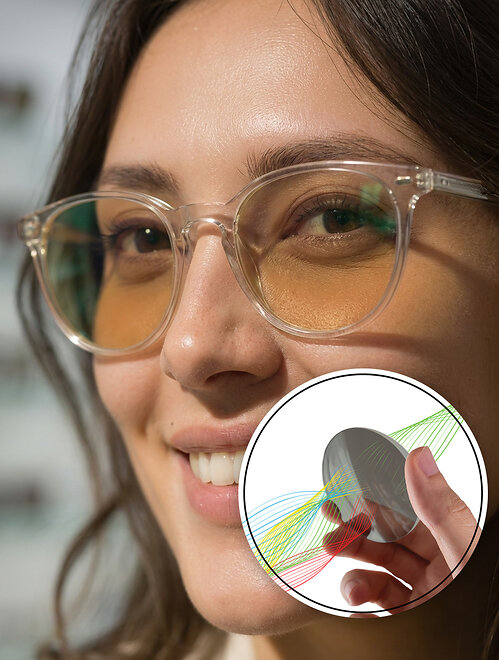
Avulux is designed to block light at wavelengths of 480 nm, in the high-blue range, and 590 nm, in the red/amber range, while allowing light from the remainder of the visible spectrum to pass through. The lenses are worn similarly to conventional eyeglasses and can be produced with or without a patient's vision prescription.
The device is intended to complement rather than replace existing migraine treatment. According to the indication described by the company, use of Avulux should not alter the usual care of patients with episodic migraine, including their medication use.
"For a long time, light sensitivity was seen as just a symptom of migraine. That thinking has changed," Charles Posternack, co-founder and CEO of Avulux, said in the company's announcement. "There is growing recognition that light sensitivity is a serious medical concern in its own right."
Mr. Posternack added that the FDA authorization provides patients and clinicians with an option specifically designed to manage the effects of light in people with migraine.
Photophobia, or light sensitivity, is among the common symptoms associated with migraine and can substantially interfere with patients' daily activities. Avulux cited estimates indicating that migraine affects nearly 15% of the global population and more than 1 billion people worldwide, including more than 45 million people in the United States. The company also noted that light sensitivity occurs in as many as 90% of people with migraine and that light or glare may trigger a substantial proportion of migraine attacks.
The authorization extends to adolescents aged 12 years and older, a population in which migraine can affect school attendance, activities, and quality of life.
The FDA authorization may give optometrists and other eye care professionals a more defined role in helping manage migraine-associated light sensitivity. Patients can obtain the lenses through participating eye care providers, optical practices, and authorized partners, according to Avulux.
Avulux said the FDA reviewed clinical evidence supporting the device, including randomized controlled trials and real-world experience. According to the company, its lenses have been dispensed to more than 50,000 wearers, and its network includes more than 1,400 eye care providers in the United States and Canada.
