


Key Takeaways
- Essilor has launched Varilux Shift, an AI-designed entry-level progressive lens intended to address the evolving visual behaviors of today's presbyopic patients
- The company says AI analyzed millions of wearer data points to optimize near vision zone placement, with simulations showing improved design softness and a larger distance viewing area compared with standard progressive lenses
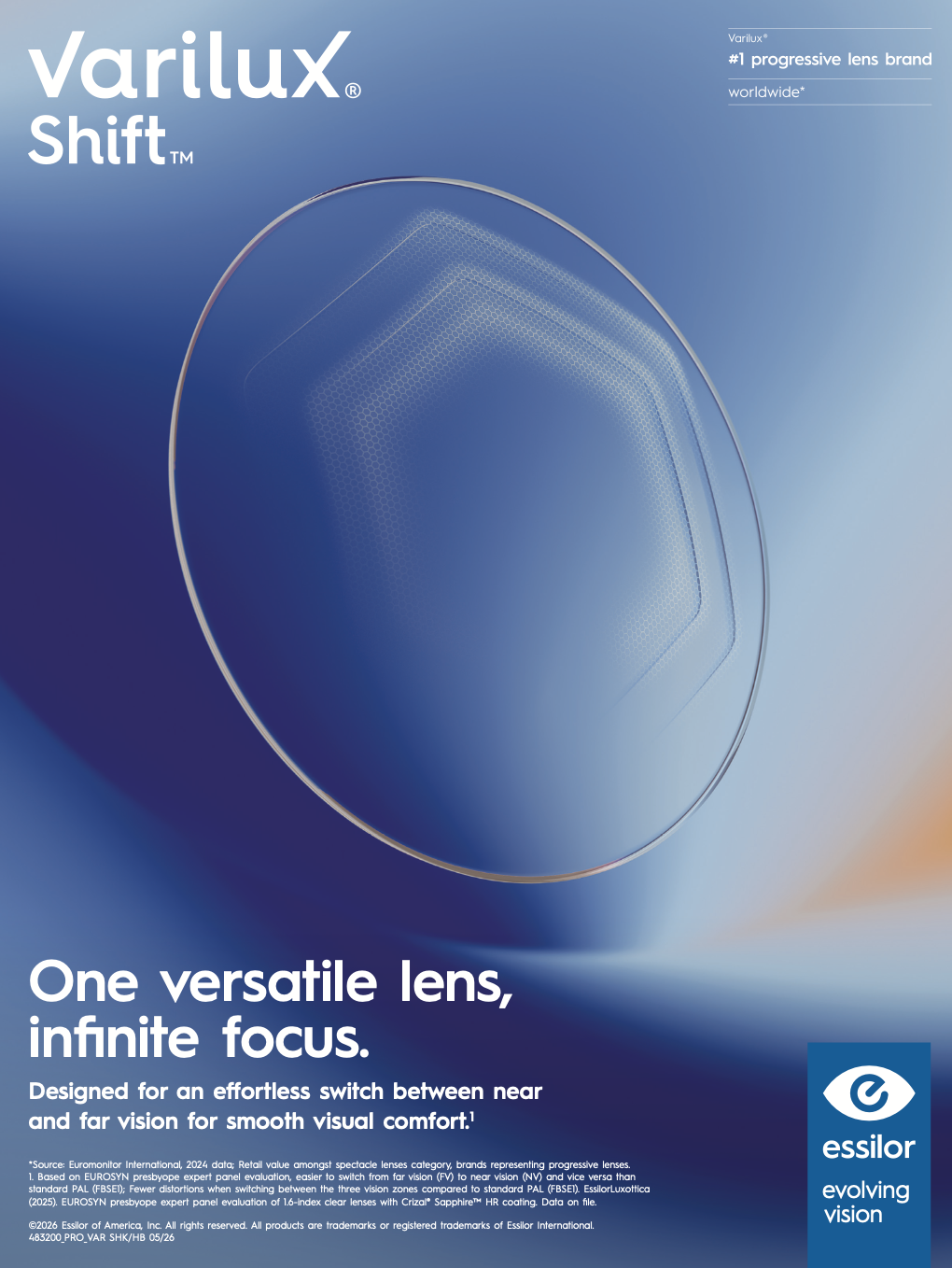
Essilor has introduced Varilux Shift, a new progressive lens designed using artificial intelligence to address the changing visual demands of today's presbyopic patients.
The company said the new addition expands its Varilux portfolio by bringing AI-driven design technology to an entry-level progressive lens, with a focus on improving near vision access, distance vision, and wearer adaptation.
According to Essilor, modern visual behavior has become increasingly dynamic, with individuals making approximately 150,000 focus shifts each day as they transition between digital devices and other viewing tasks. The company said these changing habits require progressive lens designs that enable smooth, natural transitions across multiple viewing distances.
"The way presbyopes use their eyes today has drastically changed from the past, becoming more dynamic due to the increased utilization of digital devices," said Avanti Upponi, senior director of lens product marketing, US, at EssilorLuxottica. "More than ever before, presbyopes today need a progressive lens solution that optimizes the placement of the near vision zone, provides a large far vision viewing area, and manages side effects—all while being easy to adapt to. That's why we are excited to launch Varilux Shift lenses as the go-to entry-level Varilux design, rounding out our AI-powered portfolio and bringing innovation to every patient, at every price point."
Essilor said Varilux Shift was developed using artificial intelligence to analyze millions of wearer data points. According to the company, the analysis identified behavioral differences among today's presbyopes and enabled AI models to predict variations in gaze declination based on refractive error and addition values.
These insights informed the positioning of the lens' near vision zone. Essilor said its iComfort technology optimizes the placement of this zone to better align with contemporary visual habits, providing easier access to near vision while supporting more intuitive adaptation for first-time and existing progressive lens wearers.
The company reported that AI simulations comparing Varilux Shift with standard progressive lenses demonstrated a 34% improvement in design softness, which is intended to reduce the "swim effect," and an 18% enlargement of the far vision viewing area. Essilor also cited wearer evaluation data indicating that 91% of users adapted to Varilux Shift lenses and 89% reported easy access to the near vision zone.
The company said the lens is designed to deliver the visual performance and wearer experience associated with the Varilux brand while expanding access to AI-enhanced progressive lens technology.
