


Belite Bio announced topline results from its global phase 3 DRAGON trial evaluating Tinlarebant in patients with Stargardt disease type 1 (STGD1)—an inherited retinal disorder that leads to progressive, irreversible vision loss and has no approved treatment. According to Belite, the trial marks the first successful pivotal study in STGD1, representing a transformative moment for patients, clinicians, and the field of inherited retinal diseases.
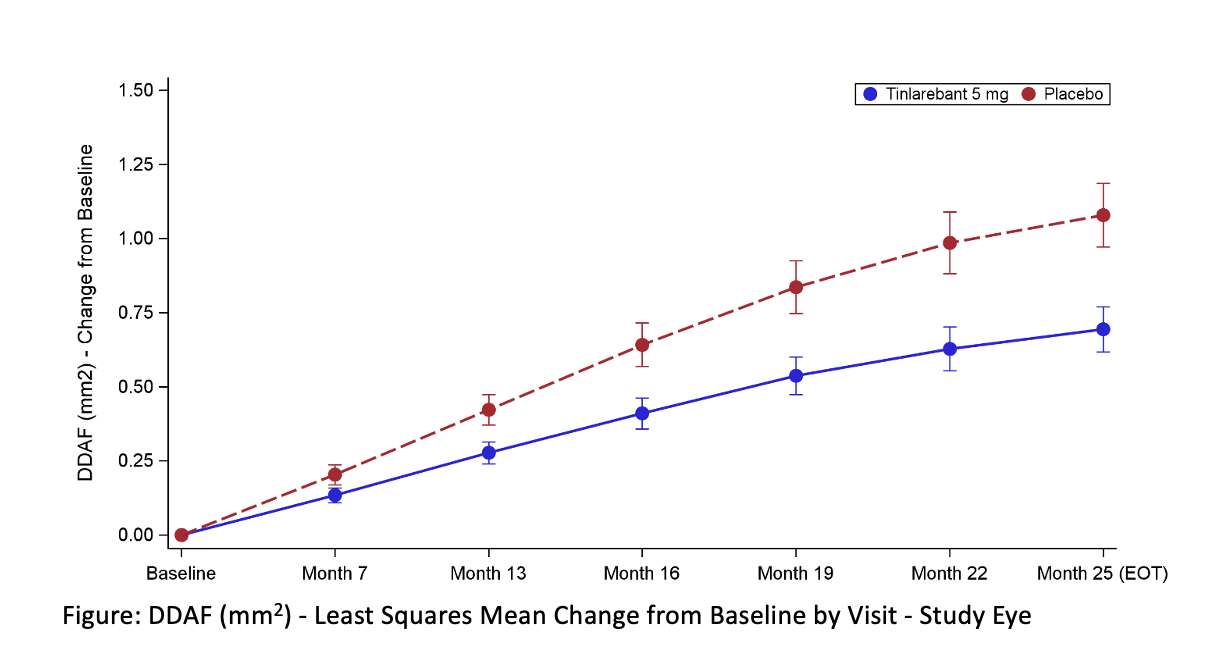
The DRAGON trial enrolled 104 patients worldwide and achieved its primary efficacy endpoint, demonstrating a statistically significant and clinically meaningful 36% reduction in the growth rate of retinal lesions—measured as definitely decreased autofluorescence (DDAF) via fundus autofluorescence imaging—compared with placebo. The prespecified analysis reached statistical significance (P = 0.0033), and a further post-hoc analysis confirmed the strength of the treatment effect (P<0.0001).
“The final results from the DRAGON trial mark a historic breakthrough in Stargardt disease,” said Dr. Tom Lin, Chairman and CEO of Belite Bio. “Not only was Tinlarebant shown to be efficacious in slowing retinal degeneration, but this is also the first time an oral treatment has demonstrated a clinically meaningful outcome in retinal degenerative disease. With this data, we are accelerating regulatory interactions globally and moving closer to delivering the first approved treatment for people living with Stargardt disease.”
STGD1 is caused by mutations in the ABCA4 gene, leading to toxic byproduct accumulation in the retina and progressive central vision loss. The DRAGON trial’s results establish Tinlarebant as the first therapeutic candidate to robustly alter the disease trajectory.
“The lesion growth reduction observed in DRAGON, coupled with a favorable safety profile, validates our therapeutic approach. These data offer meaningful hope for patients and reinforce the mechanism of Tinlarebant," said Dr. Nathan Mata, Chief Scientific Officer at Belite Bio.
Visual acuity changes were minimal over the 24-month trial in both study groups—consistent with natural history. Tinlarebant exhibited a strong safety and tolerability profile, with only four treatment-related discontinuations globally.
Belite Bio said it will present additional analyses at upcoming medical conferences following full data evaluation.
Regulatory Path Forward
Belite Bio plans to initiate regulatory discussions with global health authorities, with new drug application (NDA) submissions anticipated in the first half of 2026.
Tinlarebant has received multiple expedited and rare disease designations, including:
-
Breakthrough Therapy, Fast Track, and Rare Pediatric Disease (U.S.)
-
Orphan Drug Designation (U.S., EU, Japan)
-
Pioneer Drug Designation (Japan)
