


Key Takeaways
- Five-year OPTIC extension data showed an 87% cumulative reduction in annualized anti-VEGF injections following a single administration of investigational Ixo-vec
- Patients maintained durable anatomic control and generally preserved visual outcomes through 5 years, with sustained intraocular aflibercept expression
- No Ixo-vec-related serious adverse events or late-emerging ocular safety signals were reported during the 5-year follow-up
Adverum, a wholly owned subsidiary of Eli Lilly, presented new late-breaking 5-year data from the long-term extension portion of the phase 1 OPTIC trial at the American Society of Retina Specialists (ASRS) annual meeting in Montreal. The data, by Szilárd Kiss, MD, highlights the durability of investigational intravitreal gene therapy Ixo-vec for patients with wet age-related macular degeneration (AMD).
Ixo-vec is designed to provide continuous intraocular expression of aflibercept following a single in-office intravitreal injection. The approach aims to reduce the need for frequent anti-VEGF injections while maintaining long-term disease control.
According to the company, patients treated with Ixo-vec experienced an 87% cumulative reduction in mean annualized anti-VEGF injections through 5 years compared with their pretreatment injection frequency. Before enrollment, patients had required a mean of 9.9 annualized anti-VEGF injections, suggesting a sustained reduction in treatment burden over the follow-up period.
The long-term extension data also demonstrated durable anatomic outcomes, with a mean central subfield thickness (CST) improvement of 131.6 µm below baseline through 5 years. Visual outcomes were maintained in the previously treated, high-treatment-need population, with a mean best-corrected visual acuity (BCVA) change of -6.1 ETDRS letters over the same period.
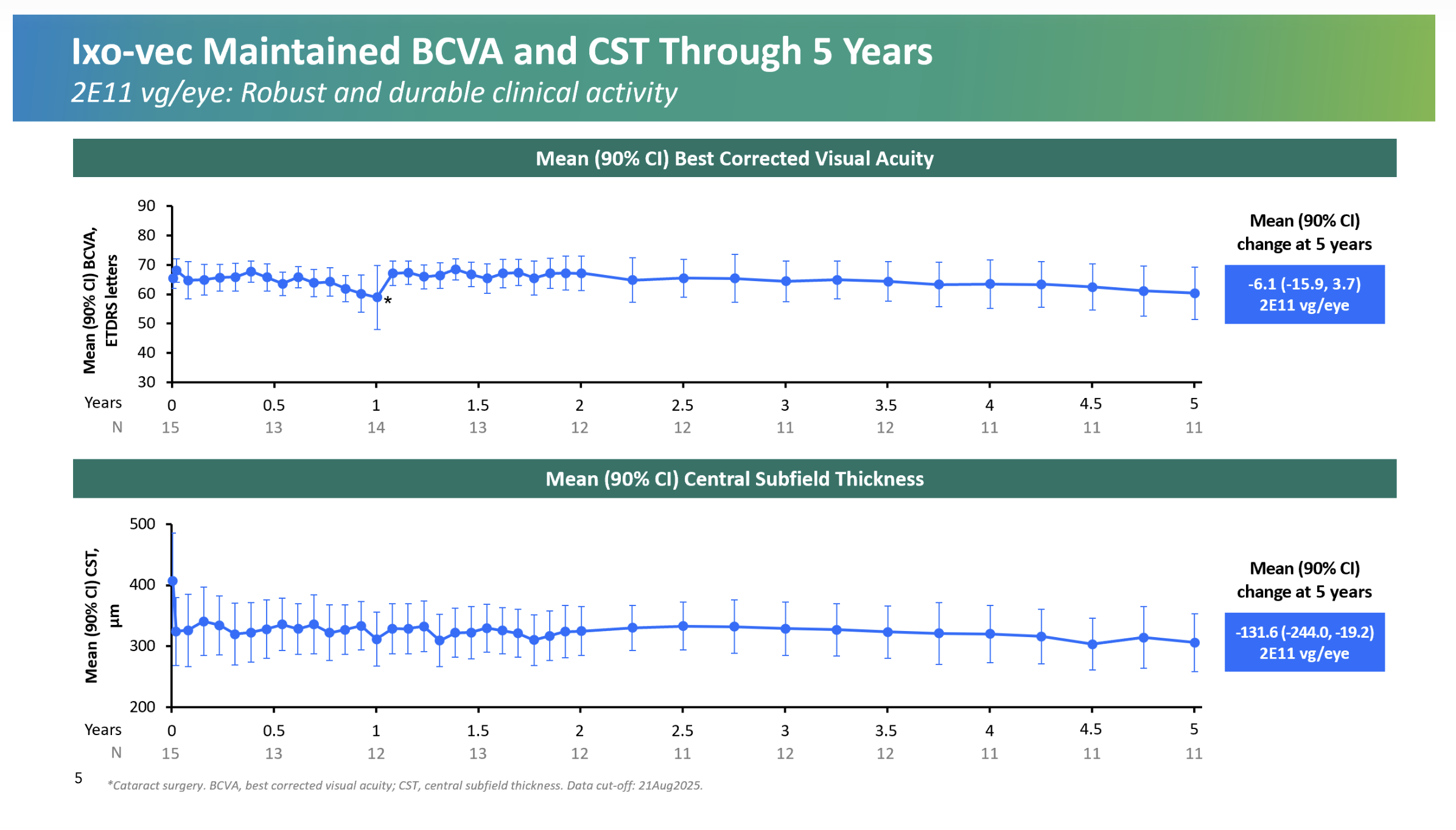
Investigators also reported sustained intraocular aflibercept expression throughout the 5-year follow-up after a single administration of Ixo-vec.
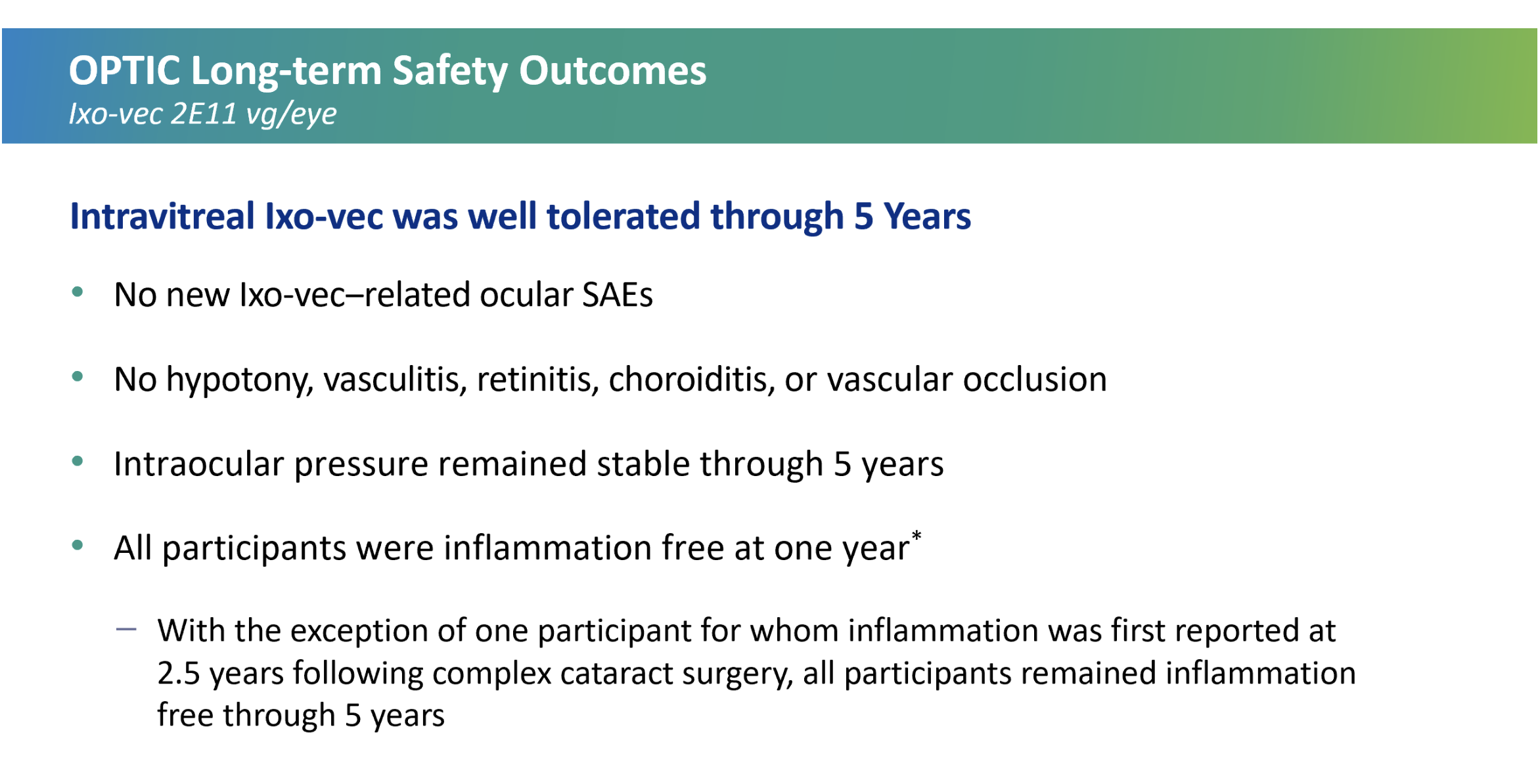
From a safety perspective, no Ixo-vec-related serious adverse events or late-emerging ocular safety signals were reported through 5 years. Specifically, investigators reported no cases of hypotony, vasculitis, retinitis, choroiditis, or vascular occlusion attributed to the therapy during the follow-up period.
Ixo-vec is being evaluated in two phase 3 trials— ARTEMIS and AQUARIUS. In ARTEMIS, enrollment has been completed and topline data are expected in the first quarter of 2027. In AQUARIUS, enrollment is ongoing.
Lilly entered into a definitive agreement to acquire Adverum Biotechnologies, including rights to Ixo-vec, in October 2025.
